







Tenant and vendor surveys
Stop chasing feedback. Start turning it into action.
Prism Surveys eliminates the manual work of gathering feedback from tenants and vendors. Reach the right people automatically, get responses tied directly to you properties and turn feedback into decisions, all without leaving Prism.

Understand what matters most
Generic survey tools force you to build contact lists, manually match responses to buildings and export data just to understand what’s happening.
Prism Surveys connects directly to your property data, so audiences update themselves, responses link to the right places and insights appear when you need them.
Everything you need to gather and act on feedback
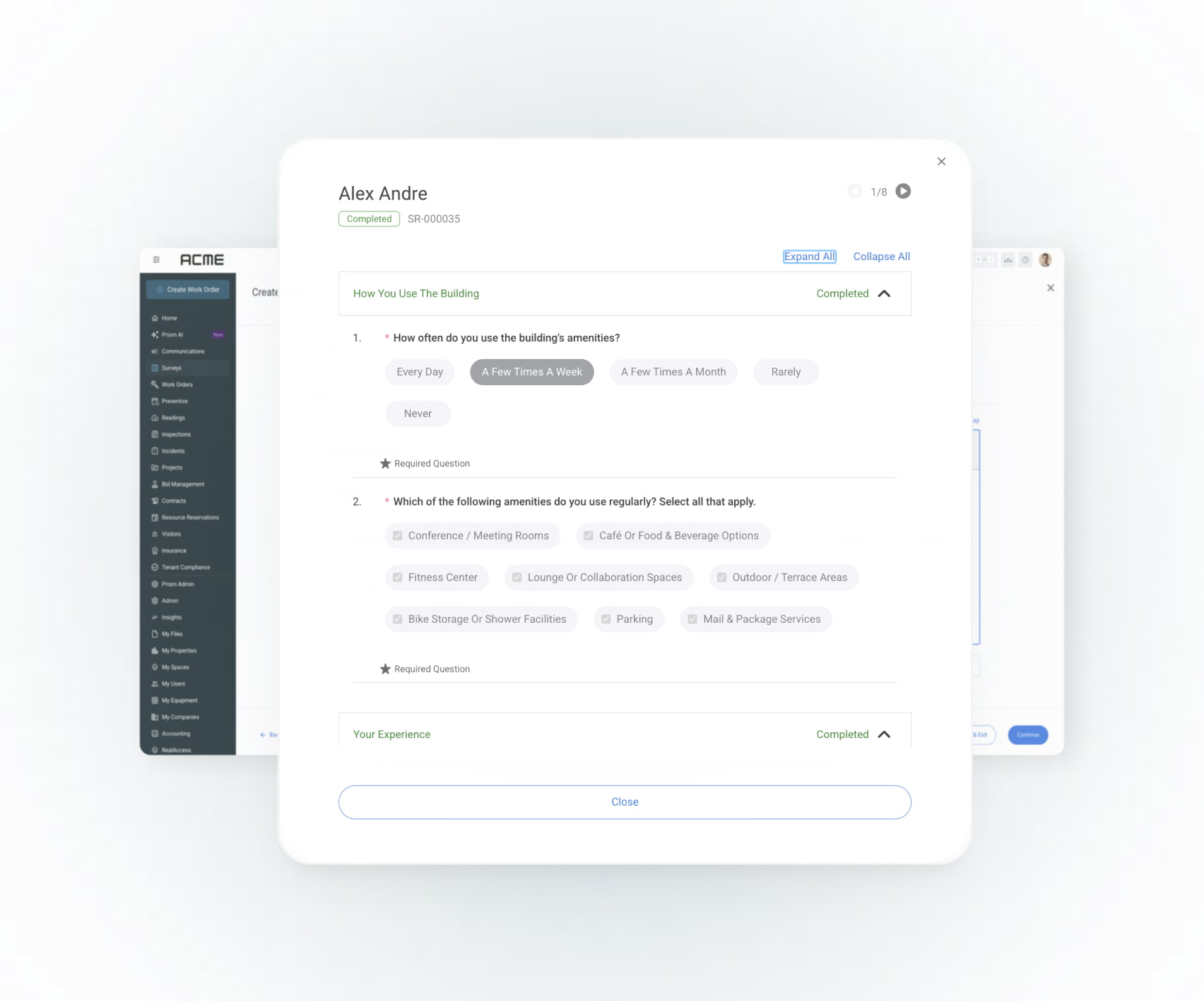
Reach the right people every time
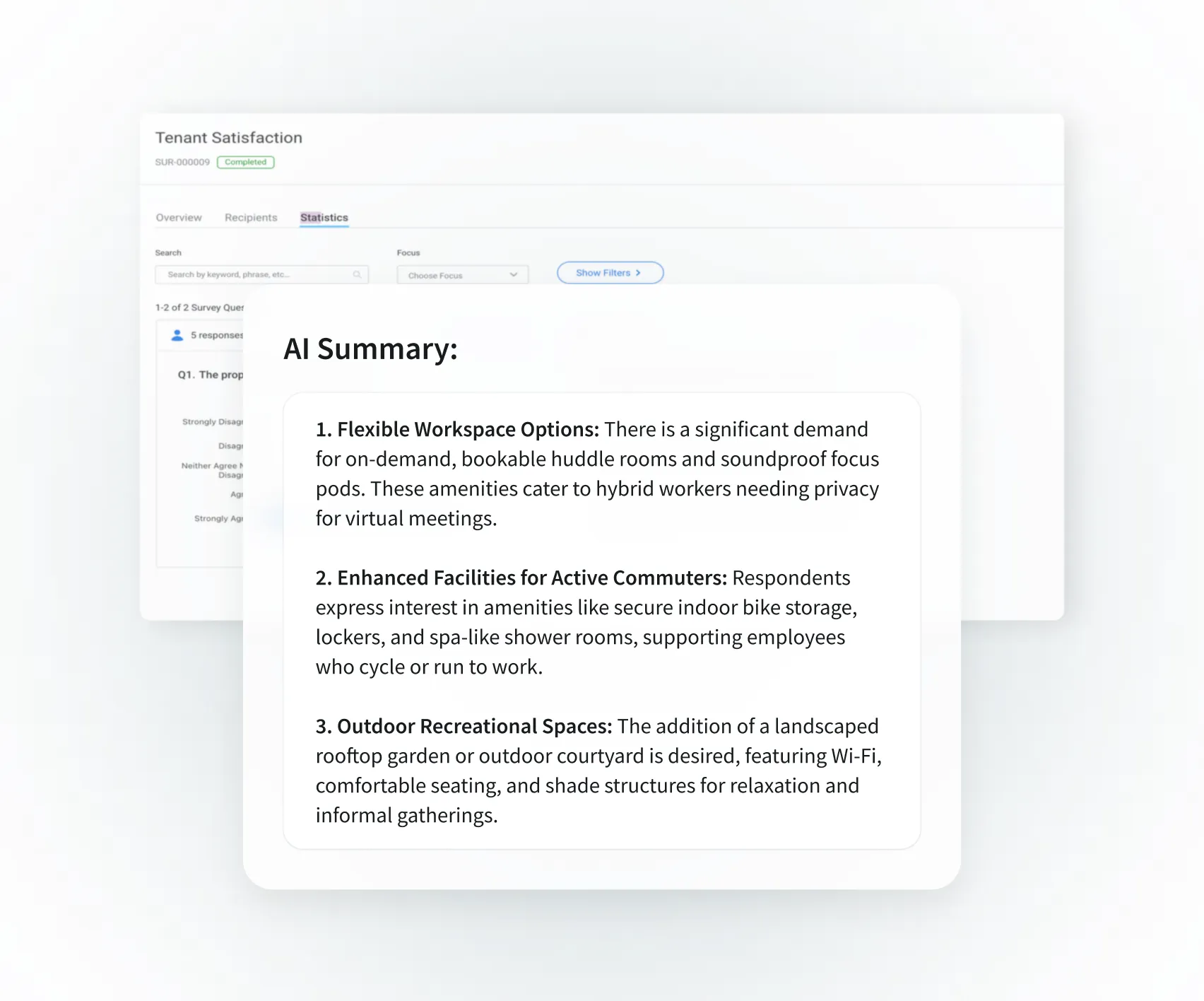
Turn responses into meaningful recommendations
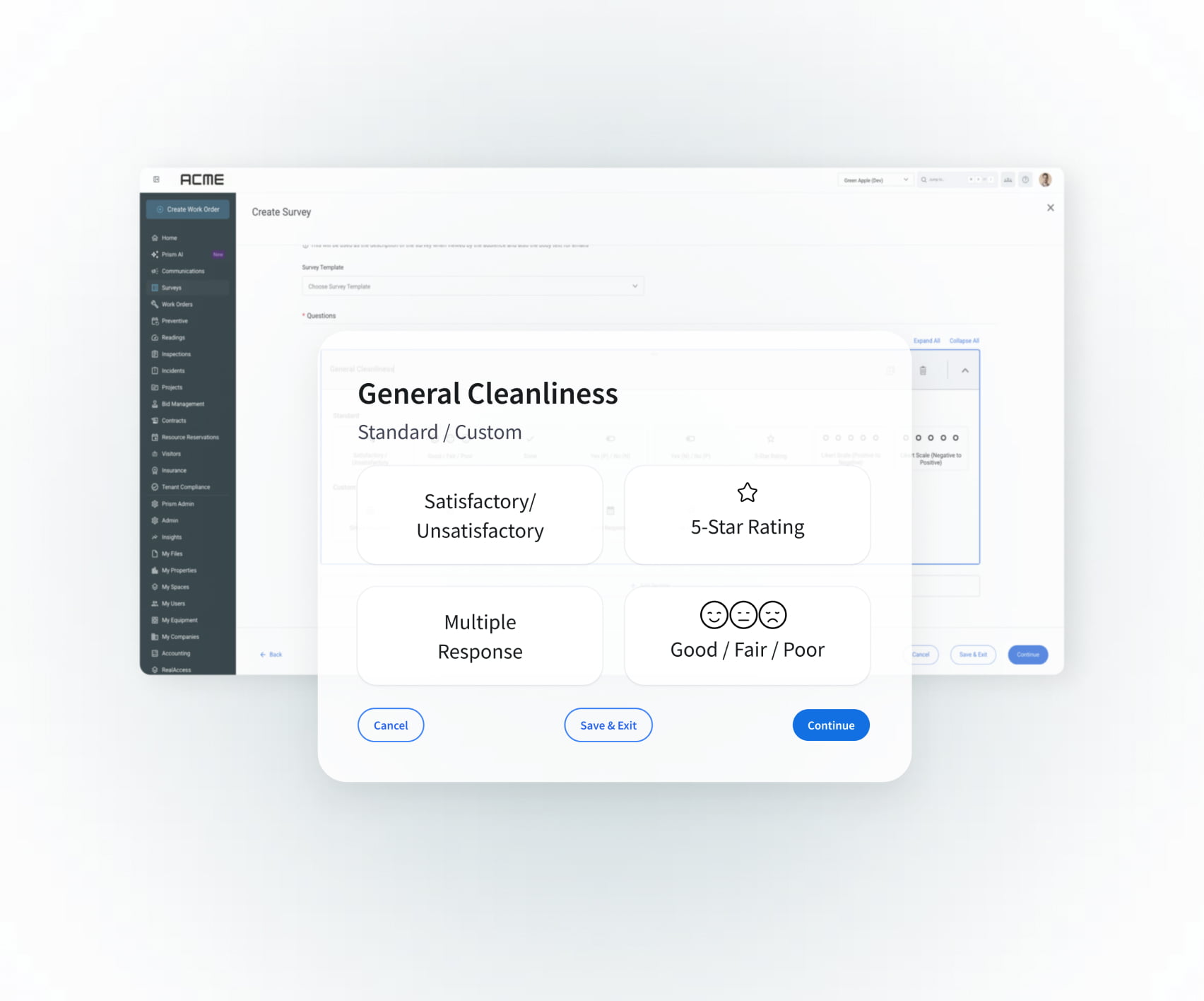
Ask the right questions with flexibly survey design
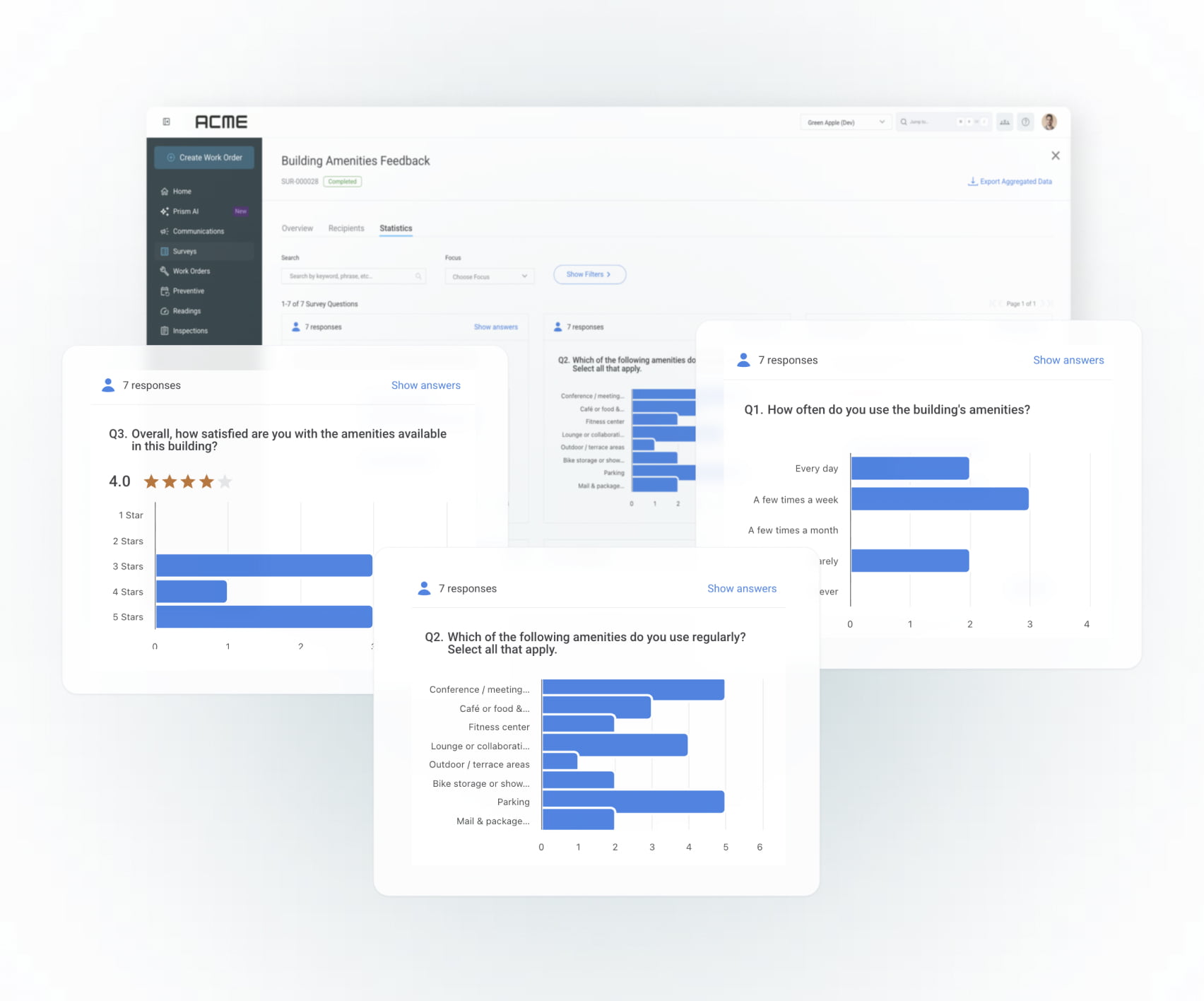
Understand performance across your portfolio
Frequently asked questions
What is Prism Surveys?
Prism Surveys is a feedback management solution that helps property teams collect and analyze tenant and vendor feedback directly within the Prism platform. It makes it easy to measure satisfaction, identify trends and uncover opportunities for improvement across your portfolio.
Who can I survey with Prism?
Prism Surveys can be used to collect feedback from tenants, vendors and other stakeholders connected to your properties. Because it uses data already stored in Prism, you can target the right audiences without building manual contact lists.
How does Prism Surveys save time?
Prism Surveys automates many of the tasks involved in collecting feedback, including audience management, recurring survey distribution and response analysis. Teams spend less time administering surveys and more time acting on results.
How does Prism AI help analyze survey responses?
Prism AI summarizes large volumes of open-ended feedback and identifies common themes, helping teams quickly understand sentiment and prioritize next steps without manually reviewing every response.
Can I automate recurring surveys?
Yes. Prism Surveys allows you to schedule recurring surveys and use dynamic audience lists that automatically update as tenants, vendors and portfolio data change over time.
Why use Prism Surveys instead of a standalone survey tool?
Unlike standalone survey platforms, Prism Surveys is connected to your property data. Responses can be tied directly to specific buildings, tenants and vendors, giving you more context and helping you make more informed operational decisions.

Start listening at scale
See how Prism Surveys can help you capture valuable input, identify opportunities for improvement and build stronger relationships across every property.